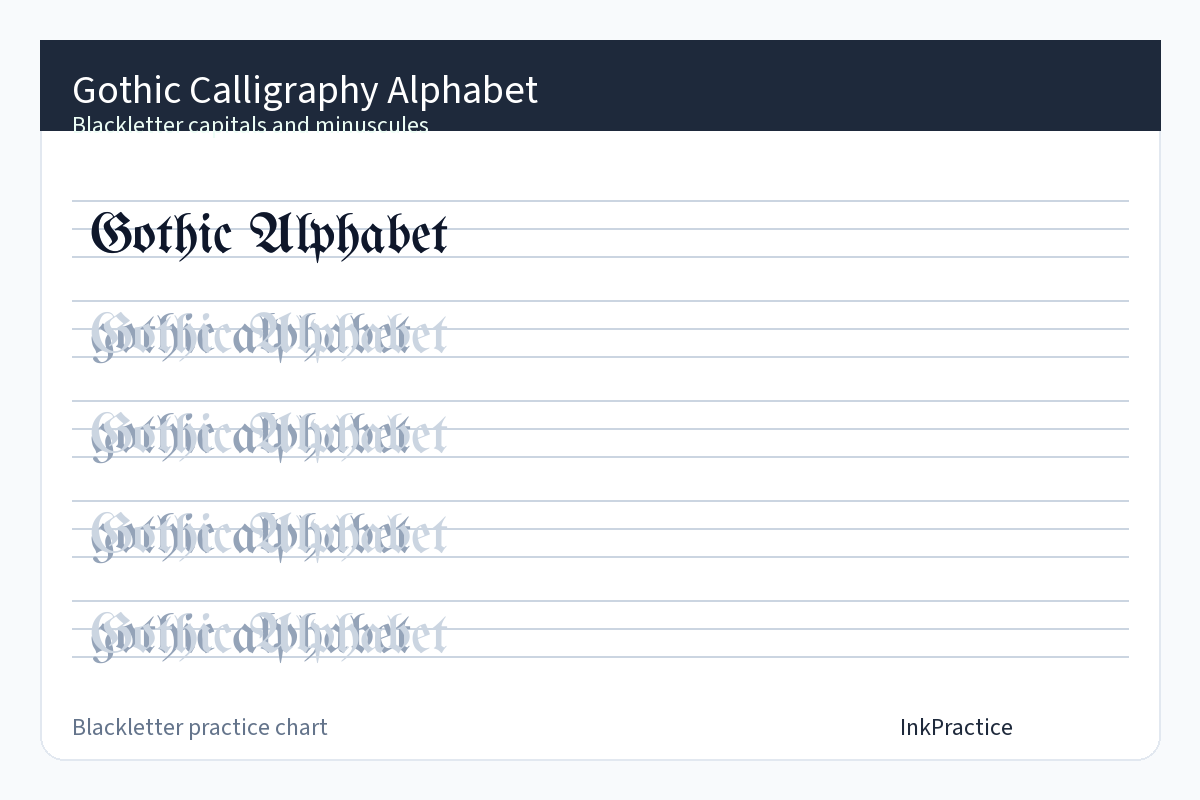
Gothic Calligraphy Alphabet
Blackletter forms with strong verticals—ideal for headlines and historic alphabet charts.
Study a full calligraphy alphabet in one place, then open the generator to print the letters and words you need.
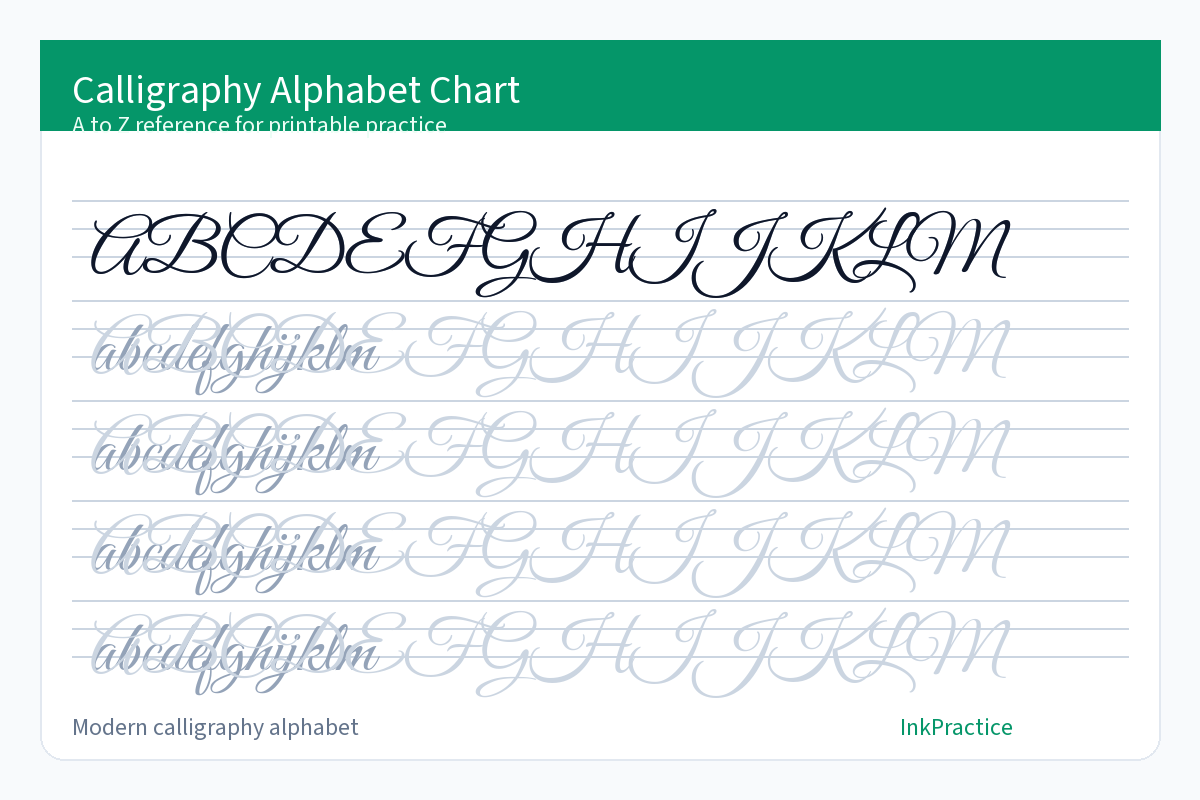
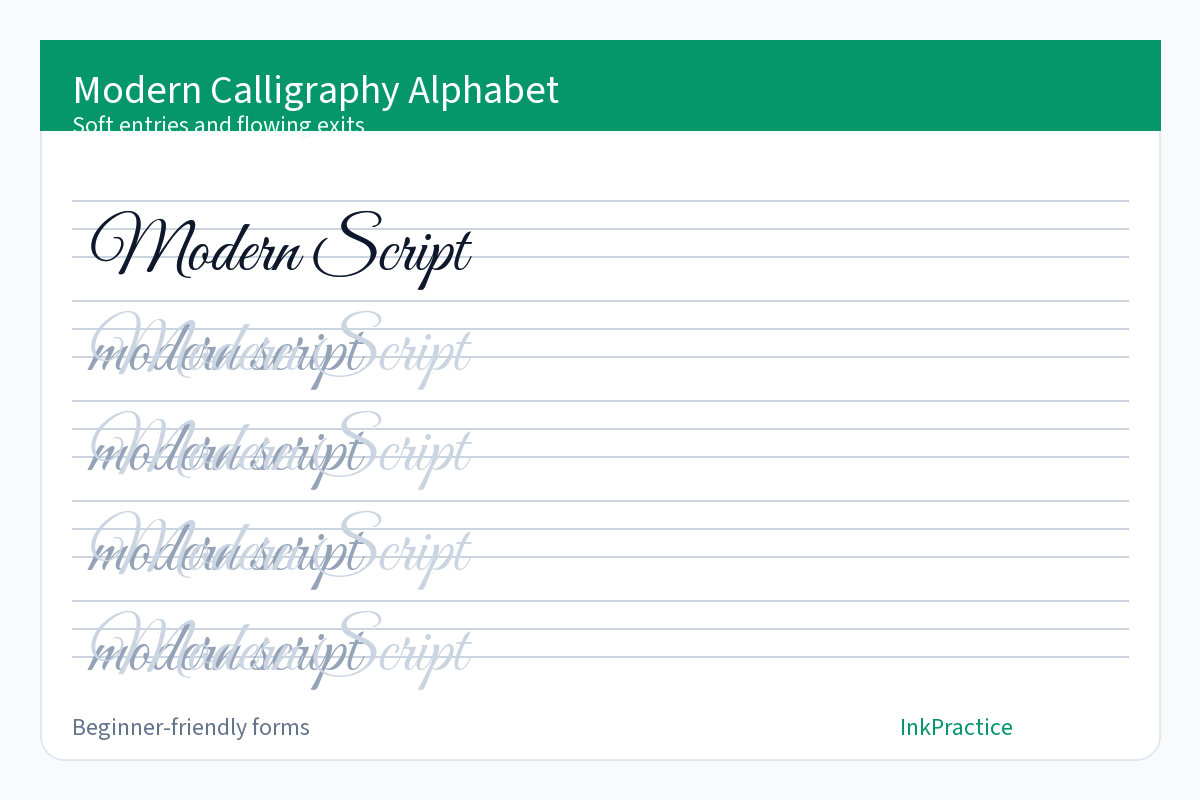
A useful calligraphy alphabet is more than a pretty poster. It should show consistent slant, clear entry and exit strokes, and enough spacing that beginners can see how each letter sits on the guidelines. InkPractice renders live alphabet grids from the same font families used in our worksheet tool, so the chart you study matches the practice sheet you print. Adults learning modern script can compare uppercase and lowercase rhythm. Parents can point to a single letter when a child rushes joins. Teachers can project a calligraphy alphabet chart beside station instructions without hunting for mismatched PDFs. After you scan the grids below, jump to calligraphy letters to type names, vocabulary, or short quotes and export a PDF. Pair charts with our calligraphy practice sheets page when you want blank guideline packs for warm-ups before copying a full calligraphy alphabet.
Modern calligraphy alphabet
Gothic calligraphy alphabet
Not every calligraphy alphabet follows the same rules. Modern and script hands reward flexible pressure; gothic and old English build structure with verticals and dense counters; copperplate and spencerian emphasize oval forms and controlled shading. Use the directory below to open a style page, then return here when you need a side-by-side mental model of how the calligraphy alphabet changes across families. Keeping style rules separate prevents beginners from mixing conflicting joins on a single sheet.
Blackletter forms with strong verticals—ideal for headlines and historic alphabet charts.
Shaded downstrokes and oval forms for classic English roundhand practice.
Light, rhythmic business-hand letterforms with graceful entrance strokes.
Dense counters and decorative capitals for traditional old English charts.
Flexible modern script suited to names, quotes, and beginner worksheets.
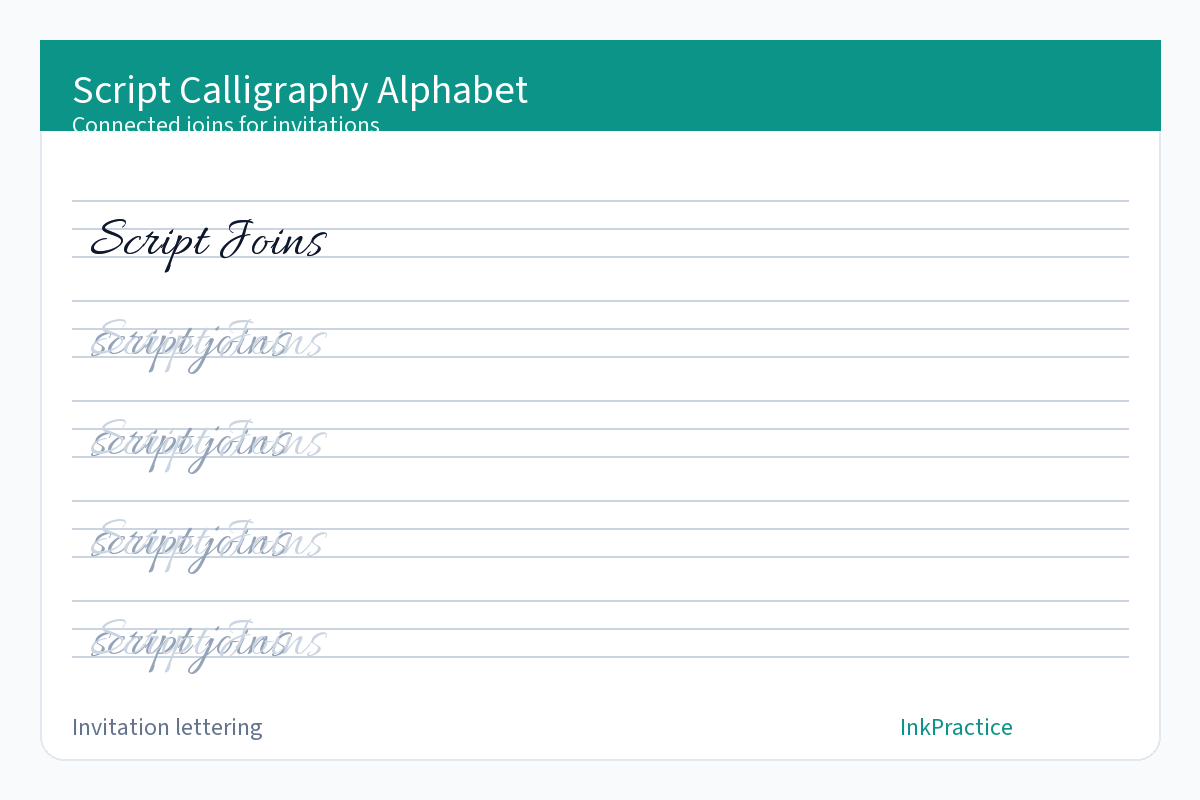
Connected script letters for invitations and flowing practice lines.
Pick three letters from the calligraphy alphabet that share a stroke family—ovals, verticals, or diagonals—and drill them before copying a full word. Trace lightly, then write from memory. When the forms stabilize, generate a custom sheet on the calligraphy letters tool so your practice words stay meaningful. Browse a to z calligraphy letters for letter-level notes, or return to the InkPractice home directory for every worksheet path.
Start with a flexible pointed pen or brush pen that can thicken downstrokes without tearing practice paper.
Choose bleed-resistant paper so ink sits cleanly on guidelines while you trace calligraphy letters.
A reliable black or walnut ink keeps contrast high on printable worksheets and finished pieces.